
How to Treat Hyperpigmentation on Skin That Keeps Coming Back
April 6, 2026 2026-09-17 5:58
How to Treat Hyperpigmentation on Skin That Keeps Coming Back
If hyperpigmentation keeps returning despite a consistent routine, the problem is rarely the products. It is usually the approach. Most routines address the already visible mark. Very few address the conditions that keep producing new ones. This post explains the difference and how to address it.
What Skin Hyperpigmentation Actually Is (And Why It Is Not a Flaw)
Hyperpigmentation is what happens when your skin produces more melanin than it needs in a specific area. That excess melanin shows up as dark spots, patches, or uneven tone on the skin’s surface.
It is not a flaw in your skin. It is a response, your skin doing what it is designed to do when it perceives a threat. The problem is that the response becomes disproportionate, and for melanin-rich skin, that disproportionate response is more common and more visible.
The three most common triggers are inflammation, sun exposure, and hormonal changes. Often, all three are at play at the same time.
Hyperpigmentation on Melanin-Rich Skin: Why It’s More Common
Melanin-rich skin has a higher concentration of active melanocytes, the cells that produce melanin. This is a strength. It is part of why darker skin tones have better natural protection against UV damage and tend to age more slowly in terms of fine lines.
But it also means that when the skin is triggered by a breakout, friction, heat, a harsh product, or sun exposure, the melanocyte response is stronger. More melanin is released. The resulting dark spot is deeper and takes longer to fade.
This is why hyperpigmentation is one of the most common concerns for women with darker skin tones, and why some skincare advice designed for lighter skin rarely produces the same results.
Building a Hyperpigmentation Routine That Holds
This is the part most routines miss.
Treating the dark spot that is already visible is only half the work. If you don’t address the cause, your skin will keep producing new spots even as the old ones fade.
These are the most common reasons hyperpigmentation persists:
You are still getting the inflammation that triggers it
Post-inflammatory hyperpigmentation, the kind caused by breakouts, ingrown hairs, or irritated skin, will keep recurring if the breakouts keep recurring. Fading the mark without clearing the congestion is like mopping a floor with a leaking tap running.
Sun exposure is undoing the progress.
UV exposure directly stimulates melanin production. If you use a brightening or correcting product but skip SPF, you are working against yourself. The sun will keep stimulating melanocyte activity no matter what else you apply.
Your routine is too aggressive.
Harsh scrubs, high-concentration acids used too often, or products that compromise your skin barrier can cause low-level inflammation you may not notice, but your skin does. That chronic irritation keeps the melanocyte response active.
Your hyperpigmentation routine isn’t consistent enough to work
Hyperpigmentation on melanin-rich skin takes time to fade. A correcting ingredient needs consistent daily use over several weeks before you will see meaningful change. Starting and stopping, or switching products every few weeks, resets the process.
What a Routine That Works Looks Like
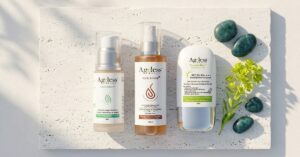
No single product corrects hyperpigmentation on its own. What works is a routine built around four things working together: protection, correction, renewal, and preservation.
Protect: How to Treat Hyperpigmentation Before It Starts
Means daily SPF, non-negotiable. Without it, correction is significantly slower and less effective. The sun will continue stimulating melanocyte activity and undo whatever progress your other products are making.
Correct: Fading Dark Spots and Skin Hyperpigmentation
Means using ingredients that interrupt or reduce excess melanin production, applied consistently, at the right concentration, in the right order.
Renew: Supporting Skin Renewal for an Even Tone
Means supporting the skin’s natural cell turnover so that fresh, even-toned skin can come to the surface. Without renewal, correcting ingredients have less to work with.
Preserve: Protecting Your Results With a Strong Skin Barrier
Means maintaining the skin’s hydration and barrier health so the routine can keep performing. A dehydrated or compromised skin barrier slows everything down and often triggers more post-inflammatory hyperpigmentation.
All four working together produce results that last. A routine missing any of them will produce disappointing results.
The Right Starting Point
If you are not sure where your routine currently has gaps, the best starting point is understanding your skin properly, not just the visible concern, but the health of the skin underneath it.
We put together a free resource for exactly this purpose.
The Ageless Belle® Skincare Guide walks you through reading your skin, building a routine for your specific concerns, and understanding which ingredients are worth using. It is written and designed to give you a real foundation.
You can download it for free here: Free Skincare Guide.
Final Thought
Hyperpigmentation is one of the most responsive skin concerns when the routine is built correctly. The skin is not the problem. The approach is. Get the approach right, and the results follow.
